
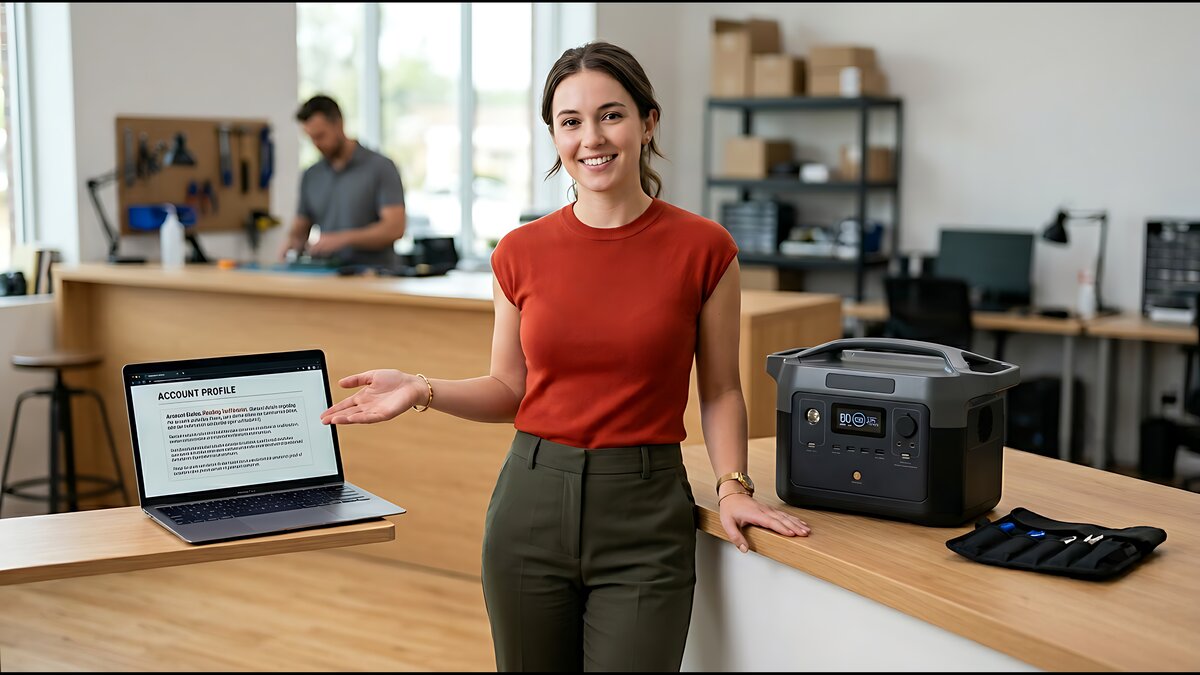
A portable power station is usually a battery system, charger, inverter, software controller, and safety device in one box. Battery chemistry affects how long it may stay useful. The warranty determines what happens if it fails. The service policy tells you whether a weak battery can be repaired, expanded with an add-on pack, or only replaced by buying another unit.
The Bottom Line
Do not shop only by watt-hours, outlet count, or sale price. A lower-cycle model may lose useful capacity sooner than a comparable LFP model with a higher rated cycle life. A long warranty may still exclude storage neglect, disassembly, unauthorized sellers, water, overheating, or use beyond the rated output. Before choosing a model, verify the exact battery chemistry, rated cycle life, warranty period, service process, battery replacement policy, storage rules, and safety certification.
The Risks
Battery chemistry changes the life expectancy
The key comparison is usually LFP, also called LiFePO4 or lithium iron phosphate, versus other lithium-ion chemistries such as NMC or NCM. Jackery lists the Explorer 1000 Plus with LiFePO4 cells and a cycle life of 4,000 cycles to 70 percent or more capacity. EcoFlow’s extra battery comparison shows LFP options rated around 3,000 cycles to 80 percent or more capacity, while one NCM option is listed at 800 cycles to 80 percent. jackery.com · us.ecoflow.com
Cycle life is a capacity target under stated conditions, not a promise that the unit will run like new for that many charges. Heat, deep discharges, high loads, fast charging, and long storage at the wrong charge level can shorten useful life. Jackery says to keep battery power above 20 percent during use or storage, recharge every three months to keep it above 50 percent when not in use, and store it away from fire, heat sources, and corrosive substances. mm.jackery.com
Do not rely on “10-year battery” language unless you can also find the chemistry, cycle rating, and capacity threshold. A model rated to 80 percent remaining capacity after 3,000 cycles is not the same as a model rated to 70 percent after 4,000 cycles.
The warranty may not protect the failure you care about
Portable power station warranties are not standardized. Manufacturer tables show wide differences: BLUETTI ranges from 12 months to 72 months by model; Goal Zero lists five-year, two-year, and 180-day examples; and Anker SOLIX lists many portable power stations at 60 months, with some smaller C-series DC models at 36 months. bluettipower.com · goalzero.com · ankersolix.com
The exclusions can matter as much as the headline term. Anker’s exclusions include modified or disassembled products, unauthorized reseller purchases, missing proof of purchase, expired warranties, and damage from misuse such as falls, rain or snow exposure, extreme temperatures, use beyond output rating, and improper operation. A five-year warranty is not the same as a five-year battery-health guarantee. ankersolix.com
Keep the receipt, buy from an authorized seller, and register the unit if the brand requires registration for extended coverage, especially for used units, open-box units, marketplace deals, and emergency-backup purchases that may sit unused for months.
Replacement options and safety certification decide what happens later
Many portable power stations are sealed consumer products, not repairable battery systems. Westinghouse’s FAQ says the internal battery in its power stations cannot be replaced and that doing so will void the warranty. Other brands may offer warranty replacement, paid service, modular expansion batteries, or no out-of-warranty repair for certain older products. Do not assume “expandable” means the internal pack can be replaced. westinghouse.com · us.ecoflow.com
Safety claims deserve a closer look. UL says UL 2743 covers portable power packs with one or more batteries housed in an enclosure and intended as a portable power source when grid power is not available. OSHA explains that a Nationally Recognized Testing Laboratory mark means the lab tested and certified the product to applicable safety standards. Look for a certification mark, listed standard, and model match rather than vague phrases like “built safe.” ul.com · osha.gov
Recent safety notices show why exact-model checks matter. CPSC recalled the HALO 1000 portable power station because its lithium-ion batteries could overheat, with one death reported. CPSC also recalled Harbor Freight’s Predator 2000W power station because reversed AC outlet wiring in Emergency Power Supply mode posed a shock hazard. cpsc.gov · cpsc.gov
Red Flags / When to Walk Away
- The listing does not identify battery chemistry, cycle life, or remaining-capacity threshold.
- The seller cannot prove it is authorized, or the warranty depends on a missing receipt.
- The unit is used, swollen, cracked, water-exposed, recalled, modified, or missing its original charger.
- The brand does not state whether the internal battery can be serviced or replaced.
- The product page uses safety language without a clear certification mark, model number, or applicable standard.
Pre-Purchase Checklist
- Find the exact model number, not just the product family name.
- Confirm the chemistry: LFP, NMC, NCM, lead acid, or another type.
- Compare cycle life using the same capacity threshold, such as 80 percent or 70 percent.
- Read the warranty period, exclusions, registration rules, and authorized-seller requirement.
- Ask the manufacturer whether out-of-warranty repair or battery service is available.
- Check the CPSC recall database for the brand, exact model, SKU, and UPC when available before buying used or discounted units.
- Verify UL 2743 or another relevant certification from the manual, label, or official spec sheet.
Takeaway
A portable power station is a battery purchase first and an outlet purchase second. The best fit is not always the biggest or cheapest box. It is the model with known battery chemistry, clear warranty coverage, realistic service options, model-matched safety certification, and storage rules you can actually follow.
Source Box
Primary sources used:
- Jackery Explorer 1000 Plus specifications: https://www.jackery.com/products/jackery-explorer-1000-plus-portable-power-station
- EcoFlow Smart Extra Batteries: https://us.ecoflow.com/pages/smart-extra-batteries
- Jackery user guide and maintenance guidance: https://mm.jackery.com/user-guide
- BLUETTI product warranty period: https://www.bluettipower.com/pages/product-warranty-period
- Goal Zero warranty and return options: https://goalzero.com/pages/warranty
- Anker SOLIX warranty, return, and replacement policy: https://www.ankersolix.com/policies/refund-policy
- Westinghouse power station FAQ: https://westinghouse.com/pages/faq
- UL Solutions portable power pack testing: https://www.ul.com/services/portable-power-pack-testing
- OSHA Nationally Recognized Testing Laboratory program: https://www.osha.gov/nationally-recognized-testing-laboratory-program
- CPSC HALO 1000 recall: https://www.cpsc.gov/Recalls/2024/HALO-1000-Portable-Power-Stations-Recalled-Due-to-Serious-Fire-and-Burn-Hazards-One-Death-Reported-Imported-by-ZAGG-Sold-by-ACG-QVC-and-ZAGG
- CPSC Predator 2000W recall: https://www.cpsc.gov/Recalls/2025/Harbor-Freight-Tools-Recalls-Predator-2000-Watt-Power-Stations-Due-to-Shock-Hazard